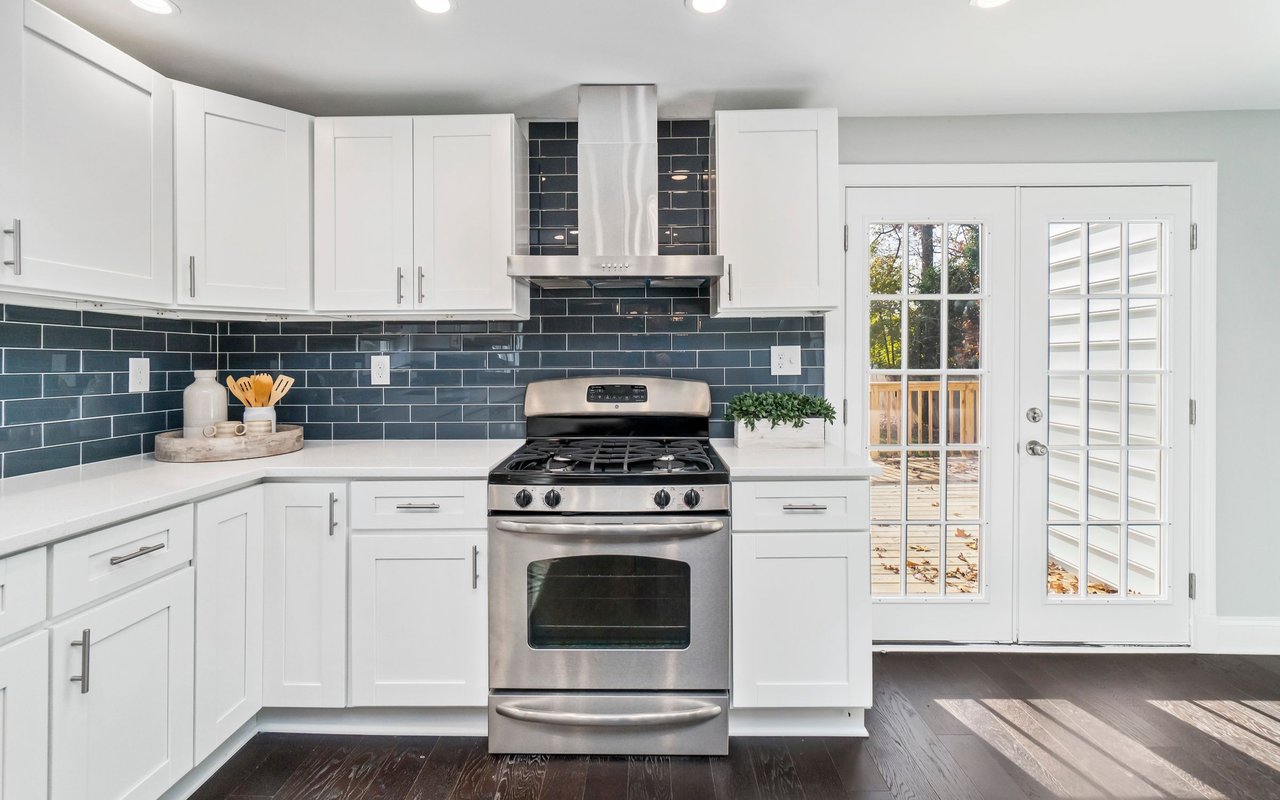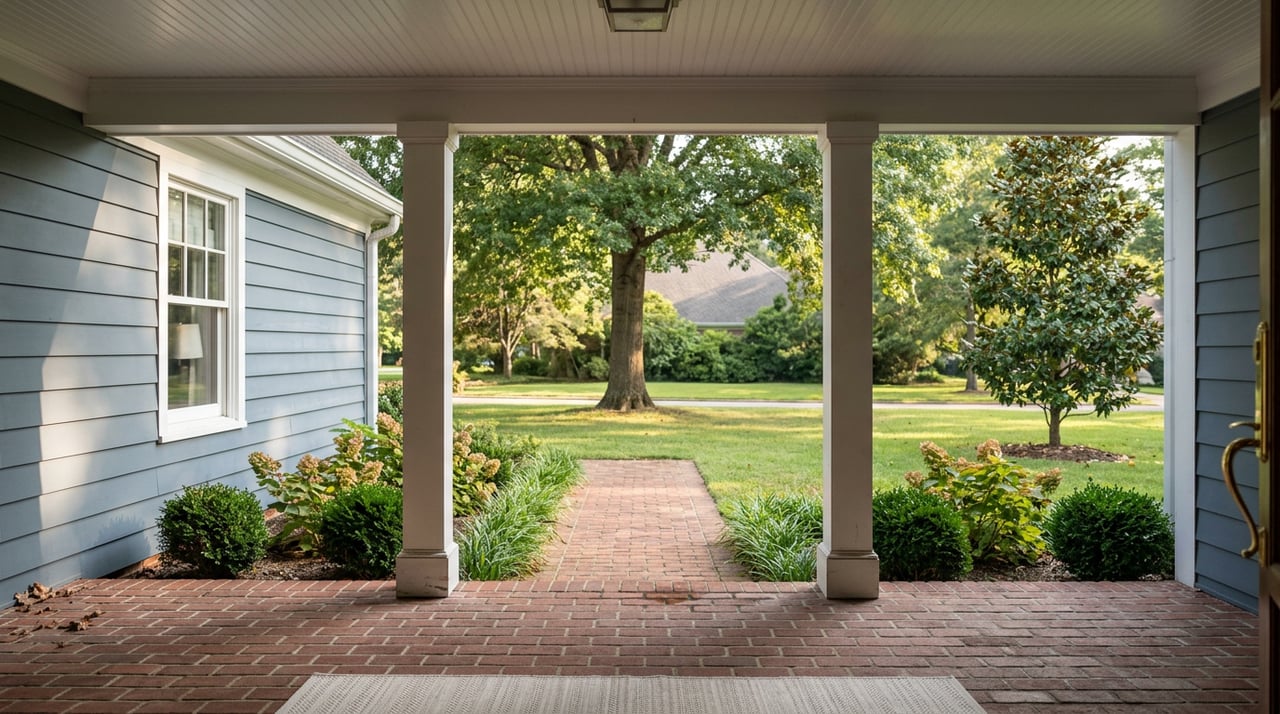
Drive down Cary Towne Boulevard and you will pass two versions of the same town's future standing across the street from each other. On one side, Fenton hums with restaurants, a hotel, and foot traffic on almost any evening. On the other, a fenced, vacant lot sits where a mall used to be, waiting on a headquarters project that was supposed to open two years ago. Both properties sit inside the same town limits. Both would show up under the same "Cary, NC" search on any portal. And neither one tells you anything true about the other.
That contradiction is the honest starting point for understanding what a single median home price for Cary actually hides. The number you saw when you started your search, somewhere in the mid $600,000s, is real. It is also a blend of two markets that behave nothing alike, taxed by governments that don't share a boundary, sitting next to a piece of land that has spent five years teaching a very specific lesson about buying on promises instead of facts on the ground.
The Portal Number Blends Two Different Towns
Redfin's transaction data for the three months ending July 2026 puts Cary's town-wide median sale price at roughly $645,000, down slightly from a year earlier, with homes moving in about 16 days and selling close to asking. That's the number every buyer sees first. It's also the number that disappears the moment you split the town in half.
West Cary, the newer planned communities built out over the last two decades, has been running a median closer to $729,600 over that same window. East Cary, the town's original 1980s and 90s neighborhoods, has been trading closer to $601,500. That's not a rounding difference. It's a gap of roughly $128,000 sitting inside a single median that pretends to describe one market.
| West Cary | East Cary | |
|---|---|---|
| Typical sale price (3 mo. ending July 2026) | ~$729,600 | ~$601,500 |
| Price per square foot | ~$273 | ~$259 |
| Typical days on market | ~18 | ~40 |
| Housing stock | Newer, planned communities | Established 1980s-90s neighborhoods |
The price-per-square-foot gap matters as much as the headline price. West Cary runs about 7 percent above the town median on a per-foot basis, and it moves fast, with roughly a third of homes selling above list in a competitive, low-inventory pocket of town. East Cary trades at a lower per-foot cost and takes more than double the time to sell, with homes typically closing a couple percent under asking. That's not a weaker market. It's a different one, with different leverage for a buyer walking in.
Why the East Side Is Cheaper, Not Worse
The gap traces back to what's actually built on each side of town, not to any difference in desirability. West Cary is where the newer construction sits, closer to Research Triangle Park, with smaller lots and a more uniform, recently built streetscape. That newness is exactly what buyers are paying the premium for: less to fix, faster closings, and a market where you'll likely be competing with other offers.
East Cary is Cary's older core, with mature hardwoods, larger lots, and in places golf-course frontage, all wrapped around housing stock old enough to need real inspection attention and, often, real renovation math. That's the trade a buyer is actually making on this side of town: a lower price per foot and far more negotiating room, in exchange for a house that will likely ask something of you after closing. For a buyer with the patience and the contractor relationships to take that on, it's frequently the better financial position. For a buyer who wants to move in and be done, it isn't.
East Cary also carries a commute advantage that rarely shows up on a listing sheet. The drive to downtown Raleigh from the east side of town is meaningfully shorter than the same drive from Cary's western edge, which matters a great deal if your job isn't in RTP.
The Tax Bill Depends on Which County Signed Your Deed
Here is the part of a Cary purchase that catches people off guard even after they've made peace with the price. Cary's town limits span three separate counties: Wake, Chatham, and Durham. Each one handles its own property assessment, valuation, billing, and collection, as the Town of Cary explains on its own tax payments page. A buyer can fall in love with a street, only to discover the house two doors down is taxed by a different county at a different rate, on a different revaluation schedule, zoned to a different school district, while receiving the exact same town services.
The math changes too. Wake County's current rate sits at 53.71 cents per $100 of assessed value, a two-cent increase built into this year's budget according to Wake County's own tax administration page. Layer on Cary's own municipal rate, which the town council raised from 32.5 to 34 cents for fiscal year 2026 and has since pushed higher again for FY2026-27, and the combined Wake-side rate lands around 90 cents per $100 of value. On a $700,000 house, that works out to roughly $6,300 a year, or a bit over $500 a month sitting inside your escrow payment. The Cary Town Council's vote to raise taxes was unanimous, and the mayor has been candid that keeping Cary's infrastructure at the level residents expect is the reason for it.
If the parcel you're looking at sits on Cary's Chatham County edge instead, none of that Wake County math applies. Chatham sets its own countywide rate independent of Wake's, as laid out on the county's tax rates and districts page, and the school assignment changes with it. This is not a detail a listing sheet volunteers. It's a line on the parcel record, and it's worth confirming before you get attached to a house.
What the Empty Lot Across From Fenton Actually Teaches You
The Cary Towne Center site is the clearest illustration of what happens when a buyer prices a neighborhood on what's coming instead of what's there. The mall closed in January 2021. Epic Games bought the 87-acre property that same month for $95 million, with a stated goal of opening a new headquarters campus by 2024. Demolition wrapped up in the spring of 2022. Then the project simply stopped moving.
By January 2025, Cary's town government had withdrawn Epic's rezoning request altogether, citing years of inactivity on the application, a detail confirmed by both WRAL's reporting and CBS17's coverage of the withdrawal. As of this year, the site still sits vacant and fenced, with no announced timeline, while Epic Games has also announced significant layoffs company-wide. Cary council member Bella Huang has pointed out publicly what makes the situation sting for nearby residents: the empty lot sits directly across the street from Fenton, one of the genuine amenity wins in that part of town.
That contrast is the whole lesson: a finished destination is not the same thing as a promised one. The old mall site is a plan that has now outlived two prior redevelopment ideas, an IKEA proposal and a sports complex, both of which also fell through before Epic bought the land. If you're evaluating a house near either one, the honest approach is to value it on the house and the street as they exist today, not on what an adjacent vacant lot might eventually become.
Matching the Side of Town to the Move You're Actually Making
None of this makes one half of Cary better than the other. It makes them different decisions. A buyer who wants predictability, a faster close, and less to fix after moving in is going to gravitate toward West Cary's newer stock and should expect to compete for it. A buyer comfortable with an inspection punch list, or specifically hunting for the renovation upside that comes with mature trees and larger lots, is often better served on the east side, with a shorter commute to Raleigh as a genuine bonus. And any seller pricing a home in either submarket should know which set of days-on-market numbers actually applies to their street before choosing a list price, because the town-wide figure won't tell them.
A Few Questions Worth Asking Before You Write an Offer
Is West Cary or East Cary the better investment? Neither is inherently better. West Cary trades speed and lower renovation risk for a higher price per foot. East Cary trades a longer sale timeline and more inspection scrutiny for a lower entry price and larger lots. The right answer depends on your timeline and your appetite for a project.
How do I find out which county my Cary address is taxed in? Confirm the county listed on the parcel record before you get attached to a specific house, since Cary properties can fall under Wake, Chatham, or Durham County and each bills independently.
Will the old Cary Towne Center site ever get redeveloped? There's no announced timeline as of this year. Two earlier redevelopment plans for that site fell through before Epic Games bought it, and the rezoning request Epic did file was withdrawn for inactivity. Buy on what's on the ground now.
Numbers like these are exactly why a single search-bar median never tells the whole story, and why the right guide for a specific street matters more than a townwide median. If you're weighing which side of Cary actually fits your move, or trying to figure out what your budget really buys once the tax county is factored in, Jamie Buckley can walk the comps with you street by street. Let's connect and figure out which Cary is the right one for you.
This article is general information, not legal, tax or financial advice. Consult a qualified professional about your situation.